


Icelandic isn’t the world’s most common language, but it is beautiful, fascinating, and worth the effort to learn. It will let you travel around one of the most beautiful countries on Earth (no, that’s not just my opinion), read Viking-era sagas and award-winning modern novels, and perhaps most importantly of all, make Icelandic friends.
Yet one of the hardest things about learning Icelandic can be finding the right resources to use. So, read on as we explore the language courses, apps, textbooks, podcasts, YouTube channels, and more that will help you master this beautiful language.
If you already know all about learning Icelandic and want to read our reviews and recommendations, check out these posts:


Learn Icelandic with this self-study guide. We’ll break down Icelandic grammar, give you some tips for creating your study plan, and answer FAQs.
Table of Contents

About the Icelandic Language
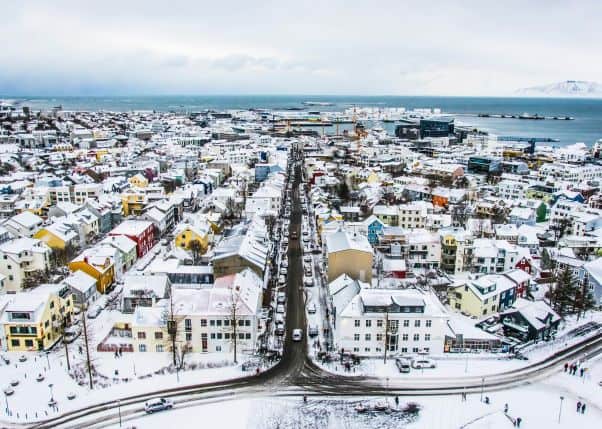
If you want to understand the Icelandic language, you need to understand the country’s geography. This small, isolated country situated where the North Atlantic and the Arctic Ocean meet was for many years almost inhospitable.
While Icelanders today benefit from an excellent quality of life and a good relationship with nature, earlier inhabitants struggled to eke out a living on a volcanic island with long winter nights and unpredictable weather.
Iceland sits 290 kilometers away from Greenland, 800 kilometers from Scotland, and roughly 1,000 kilometers away from the coast of Norway. The crossing was treacherous, and the prospect of setting sail to a cold, uninhabited island no doubt seemed unappealing.
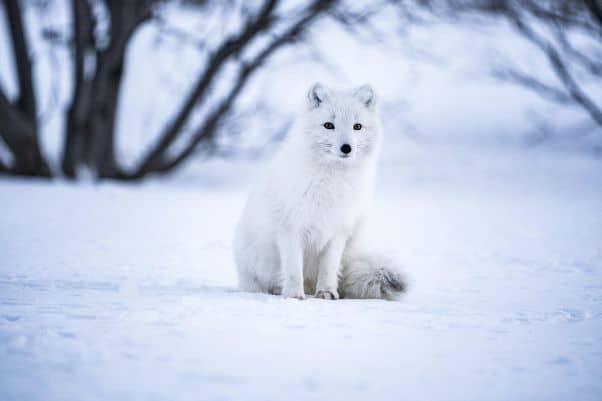
And so, for thousands of years, Iceland’s only native mammal was the arctic fox – which is believed to have reached the island at the end of the last Ice Age, traveling over the frozen sea. Humans don’t seem to have arrived until the seventh century.
The first people to inhabit Iceland were Gaelic, likely monks from Ireland or Scotland who carved crosses in Icelandic caves in the ninth century. It was the hazardous journey and harsh conditions that attracted them to the island: the voyage was a way to test – and demonstrate – their faith in God.
Their monastic peace was short-lived, however: in 874 CE, Iceland was settled by Ingólfr Arnarson, a Norwegian attracted by the possibilities of tax-free land. Contemporary sources say that the monks left or stopped coming to Iceland, preferring not to share it with “heathens.”
Over the next 54 years, hundreds of Norse people came to Iceland where they claimed land, built farms, and introduced a wider range of animals (including the forefather of the Icelandic pony). DNA evidence shows that there was still Scottish and Irish presence on the island, particularly women, but historians believe it likely that most of the Gaelic inhabitants were slaves captured in Viking attacks on the British Isles.

These settlers were the ancestors of today’s Icelanders. We know this not just because of the DNA testing and the historical and archaeological evidence, but also because of linguistics: modern Icelandic is a direct descendent of Old Norse. In fact, no other modern Scandinavian language is as close to Old Norse as Icelandic is, especially in terms of grammar.
When we look at modern languages, Icelandic has most in common with dialects spoken western Norway. This is despite centuries of Danish rule. In Iceland, this began in the fourteenth century, with the last vestiges of it ending only during World War II.
In fact, Icelandic didn’t become Iceland’s official language until 2011. Yet the language remained in use throughout the centuries of colonization, perhaps due to the almost 2,000 kilometers of distance between Reykjavik and Copenhagen.
Icelandic pronunciation, on the other hand, has changed dramatically. Learning modern Icelandic might enable you to read the sagas written 800 years ago, but don’t expect to sound like Snorri Sturluson, the likely author of Egil’s Saga.
Today, Icelandic is spoken by the roughly 360,000 inhabitants of Iceland – of which around 15% are first- or second-generation immigrants – as well as by Icelandic emigrants around the world. Although all Icelanders learn English and another Scandinavian language in school, they remain proud of their historic and rich language: they celebrate Icelandic Language Day every 16th of November and strive to coin new words rather than accepting loanwords.

Why Learning Icelandic Is the Coolest Challenge You Didn’t Know You Needed
Imagine immersing yourself in a language that connects you directly to Viking sagas, ancient myths, and the awe-inspiring landscapes of Iceland. Learning Icelandic is more than just memorizing vocabulary—it’s about stepping into a vibrant culture that fiercely preserves its history and traditions. With roots tracing back to Old Norse, Icelandic offers one of the closest living links to medieval Scandinavia. How amazing is it to read the Eddas and Sagas exactly as they were written a thousand years ago?
Sure, Icelandic isn’t the easiest language to learn. Its unique alphabet, intricate grammar, and challenging cases will keep you on your toes. But for anyone who loves a good linguistic puzzle and craves a rare adventure, Icelandic is incredibly rewarding.
For culturally curious adventurers, picking up Icelandic is more than just a language—it’s a key to understanding a nation that celebrates both its ancient heritage and its quirky, modern identity. Whether you’re drawn to Norse mythology, Icelandic literature, or simply a one-of-a-kind linguistic experience, Icelandic will expand your horizons in unforgettable ways.
How to Learn Icelandic
To learn Icelandic, combine study, immersion, and practice—start with basics using apps, explore grammar and vocabulary, and practice speaking regularly. But how do you really start?
Every language learner is different, so get ready to take this section with a pinch of Iceland’s famous salt. In fact, you’ll probably want to create a personalized study plan based on four things:
- Your goals
- Your preferred learning style and methods
- How much time you have
- How difficult you find certain aspects of Icelandic
If you’re planning a two-week road trip around this stunning island (lucky you!), you’ll need a different vocabulary from if you were planning to move to Reykjavik for a year. Similarly, if you’re just studying the sagas, whether for your history or literature degree or for pleasure, you probably won’t need to revise Icelandic slang in quite so much detail compared to if you’re planning to chat on Facebook with an Icelandic pen pal.
So, take the time to work out what you want to do in Icelandic and how good you want to become at it. These goals will likely influence both the vocabulary and the skill sets (reading, writing, speaking, listening) you want to hone. While it’s best not to completely neglect any given skill – if for no other reason than that it’s frustrating to discover you can write essays in Icelandic but find it hard to order food in a restaurant – you can then structure your study plan accordingly.
Adjust if you need to. After all, if you find memorizing vocabulary comes naturally to you but you struggle with those Icelandic vowels, it makes sense to reduce your time spent on flashcards and increase your pronunciation exercises and listening tasks.

It’s worth trying a variety of different learning resources until you find the ones that work for you. Someone else’s favorite app or movie might bore you, and there’s no point pushing yourself to use a tool that just isn’t suited to you and how you like to learn.
That’s not to say that you should skip anything you find hard or boring, of course – learning a language will always have its challenging moments. But using the wrong course, textbook, or tutor can make it even more difficult.
Here are some things you could try, in addition to the more typical courses, language classes, apps, and textbooks:
- Making flashcards
- Keeping a journal
- Following Icelandic vloggers or social media influencers
- Watching movies and documentaries in Icelandic
- Joining Icelandic-language forums and Facebook groups
- Listening to podcasts, radio shows, and Icelandic music
Be realistic, though. If you only have 30 minutes spare a day, you can’t watch a movie, read a novel, write an essay, and study your flashcards every week.
Rather than pushing yourself too hard, be kind to yourself and create a schedule that gives you time to do it all – and still feel relaxed. This will keep you motivated. In fact, you’ll probably end up making more progress over the course of a year than you would with a dispiritingly intense study schedule.
That being said, try to study five or more days a week, even if it’s just for 10 minutes at a time. It’s better to practice regularly than to cram it all in on Sunday. This is especially true if your goal is to think in Icelandic or achieve fluency.
If you skip a day (or two, or five), don’t beat yourself up about it, though. Everyone gets off track sometimes, and besides, you can’t change what you did yesterday. Just accept that it’s happened and start again.
Similarly, if you feel like you’re not making enough progress, have patience. It takes a long time to learn a language, and sometimes a task that seemed easy yesterday can feel impossible today. However, as long as you’re consistently studying, you will improve.
To see just how far you’ve come, try going back to something you watched, read, or wrote a few months ago. Never compare yourself to yesterday: too many factors, such as tiredness and the amount of time you’ve spent using your native language, can affect your Icelandic.
Finally, focus on the things you’ve done in Icelandic that you enjoyed or are proud of – whether that’s debating politics over drinks in Reykjavik or successfully asking someone to take a photo of you in front of Jökulsárlón.

Breaking Down the Icelandic Language: A Guide for English Speakers
The Icelandic Alphabet
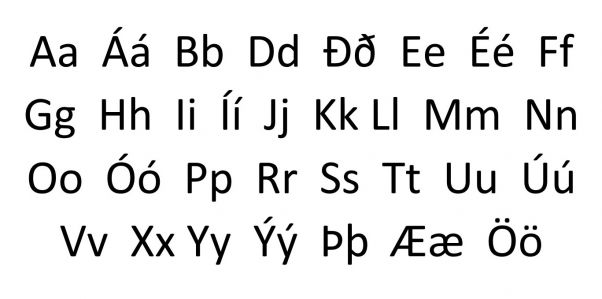
There are 32 letters in the Icelandic language, and most of them are also used in English.
Notes on Unique Characters:
- Á, É, Í, Ó, Ú, Ý: These are accented vowels representing unique sounds.
- Ð (Eth): Pronounced like the soft “th” in “this”.
- Þ (Thorn): Pronounced like the hard “th” in “thing”.
- Æ: Sounds like “eye” in English.
- Ö: Similar to the German “ö,” pronounced like “eu” in “hurt.”
The exceptions are Ðð, Þþ, and Æ, as well as the accented vowels (Á, É, Í, Ó, Ú, Ý, and Ö). Unlike in Spanish or French, these are considered separate characters: the accent changes how the vowel is pronounced.
C, Q, W, and Z are rarely used, and many people don’t consider them to be part of the alphabet. The first three only ever appear in loanwords (which aren’t very common in Icelandic), while using Z is considered outdated.
Alphabet Pronunciation
While Icelandic has a few new sounds for you to master, the pronunciation is fairly standard. I found that most words are phonetic, and all letters are voiced. Stress is regular: it’s either on the first syllable or, in certain prefixed words, on both the prefix and the first syllable of the root word.
Plus, thanks to Iceland’s small size, you won’t have to battle your way through understanding different accents or dialects.
| Letter | Pronunciation | Sounds like |
|---|---|---|
| A, a | “a” | father |
| Á, á | “ow” | cow |
| B, b | “b” | bat |
| D, d | “d” | dog |
| Ð, ð | “th” (soft) | the |
| E, e | “e” | pet |
| É, é | “ye” | yes |
| F, f | “f” or “v” | fox / vat |
| G, g | Hard “g” | goat |
| H, h | “h” | hat |
| I, i | “i” | bit |
| Í, í | “ee” | see |
| J, j | “y” | yes |
| K, k | “k” (aspirated) | kite |
| L, l | “l” | love |
| M, m | “m” | man |
| N, n | “n” | net |
| O, o | Rounded “o” | bore |
| Ó, ó | “o” | go |
| P, p | “p” (aspirated) | pen |
| R, r | Rolled “r” | – |
| S, s | “s” | sun |
| T, t | “t” (aspirated) | top |
| U, u | Rounded “i” | Similar to German “ü” |
| Ú, ú | “oo” | moon |
| V, v | “v” | vet |
| X, x | “ks” | fox |
| Y, y | Same as “i” | bit |
| Ý, ý | Same as “í” | see |
| Þ, þ | “th” (hard) | thing |
| Æ, æ | “eye” | eye |
| Ö, ö | “u” (fur) | Similar to German “ö” |
Notes:
- Accented vowels (á, é, í, ó, ú, ý, æ, ö) are distinct from their unaccented counterparts. The accent changes the sound entirely, not just the stress.
- Þ (thorn) and Ð (eth):
Þ: Pronounced like the “th” in thing (voiceless).
Ð: Pronounced like the “th” in this (voiced). - G: Identical to English G as in go. But is somestimes softened between vowels or fricative such as lögur(law), þegar(when), or vegur(road/way).
- H: Similar to English H as in hat. Can also be silent or softened when h precedes certain consonants like hn, hr, and hl such as hnífur(knife) pronounced as “ní-fur.” But when combined with a V, …………
- J (y sound): The pronunciation is not the same as in English. The letter J is pronounced like the “y” in yes.
- F: Same as English F but can sometimes sounfd like a V when it appears between vowels. For example, haf(ocean) pronounced as “haf” and áhrif(influence) pronounced as “áhriv”.
- V: Pronounced as V same as in English or a W.
- Æ: sounds like eye in English.
- Ö: Pronounced like “eu” in fur. Similar to the German “ö.”
You can practice your pronunciation with this YouTube video, or if you’re from the US, I found this video really helpful, plus it’s well-rated by native Icelandic speakers.
Vocabulary
Icelandic purism means loanwords are rare, although not unheard of: “coffee,” for example, translates to kaffi. Yet by and large, the Icelandic Language Institute successfully creates Icelandic words for modern technology and trends.
Some people complain that this means you have to learn even more words, yet there are benefits to this system.
These new Icelandic words, such as tölva (computer), rafmagn (electricity), and myndband (video), are normally logical compounds of other words. When you learn them, you’re also picking up additional and conceptually connected Icelandic vocabulary.
Tölva, for example, comes from tala (number) and völva (prophetess), making your computer a prophetess of numbers. Rafmagn combines raf (amber) and magn (power): electricity is amber power. Myndband is made up of mynd (picture) and band (tape, string): video is, quite literally, images on a tape.
You’ll also discover that most Icelandic places’ names are made up of a list of relevant nouns. Vatnajökull, for example, combines vatna (water) and jökull (glacier), while Reykjavik translates to “bay [vik] of smokes [reykja].”
For analytical learners who find it easier to memorize words through patterns, this can make Icelandic word lists slightly less challenging. And if you’re planning a road trip around this small but scenic country, you’ll come back not just with amazing memories but also an expanded vocabulary.

Basic Icelandic Phrases for Beginners
Get started with these essential Icelandic phrases:
- Halló! – Hello!
- Góðan daginn! – Good day!
- Hvað heitir þú? – What’s your name?
- Ég heiti… – My name is…
- Takk! – Thanks!
- Þakka þér fyrir! – Thank you!
- Bless / Bless bless – Goodbye
- Afsakið – Sorry, / excuse me / pardon me
- Já / Nei – Yes / No
- Hvar er klósettið? – Where is the bathroom?
- Geturðu talað hægar? – Can you speak more slowly?
- Ég skil ekki. – I don’t understand.
These phrases not only make conversations smoother but also show your appreciation for Icelandic culture.
Syntax, aka Word Order
Generally, just like in English, Icelandic has a subject–verb–object sentence structure. And just like in English, the verb moves to the front for yes-no questions. (“You are hungry. Are you hungry?”) However, there are some exceptions to this structure, especially in embedded clauses and poetry.
Let’s put poetry to one side, and instead look at what main and embedded clauses are. “The child reads the book” is both a full sentence and a main clause. “The child, who out of all the children is the only one not wearing a green t-shirt, reads the book” contains an embedded clause (“who out of all the children is the only one not wearing a green t-shirt”) inserted into the main clause.
In Icelandic, the verb is always the second grammatical component of an embedded clause – even if that means the subject comes later. This is called V2 word order. We sometimes see this structure in English, although not normally in embedded clauses. For example, you might say: “Here comes the mayor” or “Never will I ever do that”.
As for negation, this is pretty easy: adding ekki after the verb will make any sentence negative.
Inflection
Inflection is the reason why Icelandic has a reputation for being “hard.” It means that words change their form in order to convey extra meaning while remaining within their grammatical category (verb, noun, adjective, adverb…). That might sound vague or confusing, so here are some examples in English:
- “Be,” “am,” “are,” and “is” are all inflections of the same verb. They never stop being verbs (their grammatical category), but the word changes to give extra information about who or what the subject is.
- “Disappear” and “disagree” are inflected versions of “appear” and “agree:” the words remain verbs, but prefixing them with “dis-” means that they carry their opposite meaning.
- The change from “happiness” to “happy” isn’t an example of inflection because the word goes from being a noun to an adjective. The grammatical category changes.
- The change from “happy” to “happier” is an inflection, however: both words are adjectives, but one is comparative.
There are many types of inflections. When verbs change to reflect the time (eat/ate/have eaten) or subject (eat/eat/eats), it’s called conjugation. When nouns, adjectives, pronouns, and words with other grammatical functions change, it’s often called declension.
Icelandic inflects a lot, which means you’ll spend more time memorizing grammar tables and identifying the grammatical functions of words. If you already speak German or Dutch, you’ll likely find this helpful, since the languages have quite a bit in common.
The positive side is that the inflection is probably the most frustrating part of learning Icelandic: the rest of the language is fairly accessible for English speakers.
Let’s explore some of the ways that Icelandic does – and doesn’t – inflect.
Nouns
Nouns inflect for several reasons.
Gender
Icelandic has three genders – male, female, and neuter. In other words, when you want to write that a woman is reading an Icelandic saga, both the woman (kona) and the saga (saga) are feminine.
Case
This means the word form reflects its role in the sentence. Think about the way we say “I” or “me” in English: we use “I” when we’re the object and “me” when we’re the subject. In Icelandic, we see cases used for nouns as well, and there are four of them: accusative, nominative, dative, and genitive.
For example, if a man sees a horse, he is the subject (nominative) and the horse is the direct object (accusative). You would say: “The man [nominative] sees a horse [accusative].”
If he gives a horse to a friend, a second, indirect object appears: the friend (dative). It becomes: “The man [nominative] gives a horse [accusative] to his friend [dative].”
And if he tells his friend the horse’s name, he’ll then use the genitive case for “horse” to show it’s the owner of the name. It’s the equivalent of saying “the horse’s name” or “the name of the horse” in English.
A sentence with all four cases can get pretty confusing, but just think about who’s doing what in the sentence. For example, you would say: “The man [nominative, because he’s the “do-er”] tells his friend [dative, because the friend is the recipient] the horse’s [genitive, because the horse is the owner of what comes next] name [accusative, because it’s the object being given].”
Number
Just like in English, Icelandic nouns can be singular or plural.
Article
In English, you might say “an apple” (using the indefinite article) or “the apple” (using the definite article). In Icelandic, you don’t need to do anything if it’s “an apple:” the indefinite article doesn’t exist, meaning “apple” (epli) and “an apple” (epli) are identical. However, the definite article does exist. In everyday speech and writing, you’ll add it as a suffix to the noun (eplið).
While this might sound complicated, don’t worry: once you’ve done a few exercises and drills, it should start to make more sense.
There are some positives, too. For example, certain prepositions always go with certain cases. If you would use “to” when saying something in English, you’ll know that you need the dative case when speaking in Icelandic.
Plus, there are far fewer cases than in some other languages, for example, Russian or Polish. And once you’ve understood the case system, you’ll be in a good position to pick up other Germanic languages.
Verbs
There are several verb groups that will determine how a verb is conjugated. If you’ve ever studied a Romance language, such as French or Spanish, this will be familiar to you.
Just like in English, you’ll also need to conjugate verbs based on their tense, person, and mood. This will seem a lot more similar to English speakers than noun cases. Cooljugator and Mímir are great resources to help you grasp conjugation.
For example, Icelandic verbs have four moods – which is only one more than English. These are the indicative (“He does it”), imperative (“Do it!”), conditional (“she would do it”), and subjunctive (“If she were to do it…).
There is one thing that might surprise you, though: the mediopassive or middle voice. In English, we choose between the active and passive voice to reflect whether the subject did something or had something done to it. In Icelandic, there’s a third option.
- “The girl closed the car door” → you would use the active voice in both English and Icelandic
- “The car door was closed (by the girl)” → you would use the passive voice in both English and Icelandic
- “The car door closed” → although you would use the active voice in English, you would use the mediopassive voice in Icelandic
Even if “the car door” is the subject of the sentence, it cannot close itself. It needs some form of external force to do so. And that’s why, in Icelandic, you use the mediopassive voice to say bílhurðin lokaðist.
You can also use the mediopassive voice in reported speech, reflexive actions, and some other situations. You’ll normally recognize it by a “~st” ending, like above with “lokaðist.”
Be careful with automatically adding it, though – sometimes this small suffix can dramatically change a word’s meaning, especially when you get into the realm of reflexive verbs. But that’s something best learned on a word-by-word basis.

Adjectives
Adjectives must agree with the gender, number, and case of the noun they’re modifying. While this means you will have some more inflection tables to memorize, most of them are fairly regular. Just be careful with góð, or “good,” which not only breaks the rules but is also a word you’ll probably use quite a lot.
Adverbs
Good news! Adverbs don’t inflect beyond comparisons, i.e. the equivalent of soon–sooner–soonest in English. Plus, many adverbs can be created by adding ~lega to an adjective, much like how we use “~ly” in English.
Pronouns
In some ways, this will seem pretty similar to English. You have your personal pronouns (I, they), reflexive ones (myself, themselves), possessive (mine, theirs), demonstrative (this, that), and indefinite (some, anybody). You will, however, need to decline them based on the relevant case and whether they are singular or plural.
By now, you’ve probably realized that studying Icelandic grammar requires a firm understanding of sentence structure and patience when memorizing inflection tables. If that feels like a challenge, we get it. But stay patient: it’s worth all the work. When you finally feel confident with the mediopassive voice or realize that you don’t need to think about which case to use, you’ll feel proud of how far you’ve come.
Besides, Icelandic has a lot of things going for it: the accessible pronunciation and alphabet, the fascinating literature, the stunning landscapes and travel opportunities, the exciting history… and you’ll be doing a lot more than just studying the grammar, after all.

Challenges of Learning Icelandic
Learning Icelandic is no walk in the park, but every hurdle adds to the adventure:
- Complex Grammar and Cases: With four grammatical cases, Icelandic grammar is like a brain-teaser. Solving it feels incredibly rewarding.
- Extensive Verb Conjugations: Icelandic verbs have many forms, adding depth to the language. It’s challenging but enriches your understanding of structure.
- Pronunciation Puzzles: Mastering Icelandic’s unique sounds is tough but unforgettable. Each success feels like unlocking a new level.
- Limited Resources: With about 350,000 speakers, resources can be sparse. Immersion—or a trip to Iceland—might be your best bet.
- Vocabulary Challenges: Icelandic avoids borrowed words, making its vocabulary distinct. It’s unfamiliar, but that’s what makes it special.
Why Learning Icelandic Is Worth It
Learning Icelandic isn’t just about picking up another language—it’s about stepping into a world of sagas, history, and culture. Whether you’re tackling epic grammar rules, exploring Viking lore, or simply enjoying the thrill of mastering “Eyjafjallajökull,” Icelandic is a journey unlike any other. Ready to say “Já!” to the challenge?

Where to Learn Icelandic: Additional Icelandic Learning Aids
There are lots of other tools that can be of great help when learning Icelandic. With these resources, you can elevate your Icelandic learning experience and expose yourself to the language in different contexts.
Icelandic Apps
Drops App

Drops is a phone app for iPhone and Android that covers 50 languages. Daily games test the user on thousands of vocabulary words, and many of these words are ideal for everyday use. Drops has an entertaining, user-friendly interface, but it also lacks grammar lessons, and it works better for some languages than others. For anyone looking to supplement their vocab lessons, this app is worth considering; however, the free version might be more worthwhile than the paid version.
See our Super-Detailed Drops App Review
Clozemaster

Ideal for people who are already at an upper beginner/intermediate level, Clozemaster will help you build your vocabulary and learn new words and sentences in context. While you won’t learn much grammar or improve your speaking and writing much, it is great at what it does and the videogame aspect makes it fun and addictive to work though. Although the exercises are all pretty much identical, there are various ways in which you can increase the difficulty and Clozemaster’s free account is almost as good as the Pro User one.
See our Super-Detailed Clozemaster Review
Memrise
Memrise is a super popular language-learning app available online and on mobile. It functions much like a gamified flashcard app, and it offers a lot of content for free. A lot of the content is user-created, and there is a premium subscription that provides access to additional features. Memrise can be a great tool in your arsenal, but you’ll need more to learn a language seriously.
See our Super-Detailed Memrise Review
Brainscape
Brainscape is a flashcard app that uses a Spaced Repetition System, also often referred to as ‘adaptive flashcards’, to help you memorize new vocabulary and facts. It has a team of scientists, engineers, and education experts working to optimize their program for effective learning. Brainscape is quite similar to Anki, but has a more modern and colourful interface. They also have Certified Classes, which are decks that seem to have been developed by experts in the chosen topic. The app adds what they call Intelligent Cumulative Exposure (ICE) to some of their Certified Classes; it seems to combine a Spaced Repetition System with gradually introducing new concepts, increasing the difficulty of the concepts, and providing context so you can build your own sentences. It has several Certified Classes for various languages (and other topics), and many more decks created by users. Unlike Anki, edits that creators make to user decks seem to sync up even after you have downloaded the deck. With the free version, you have limited access to premium decks but unlimited access to user-made decks.
See our Super-Detailed Brainscape Review
LingQ
LingQ is a language-learning platform that focuses on extensive reading for over 30 different languages. You can import your own content or choose from the community library of books, articles, podcasts, YouTube videos, and more.
The app highlights unknown words across every lesson and makes them reviewable via different types of SRS flashcards. The more you read, the more accurately you will be able to identify content that is suitable for your level.
Although I did not find it beneficial for languages I had never studied before, I think LingQ can be helpful for upper-beginner to advanced language learners who enjoy reading. It is especially helpful if you struggle to find graded readers in your target language.
See our Super-Detailed LingQ Review
HelloTalk
HelloTalk is a mobile app for language learners interested in language exchange. It facilitates communication between native speakers and those learning their language with the use of built-in language tools. It also offers audio lessons in 10 languages as part of a separate subscription.
See our Super-Detailed HelloTalk Review
Icelandic Courses
Preply

Preply is an online educational platform that matches tutors with students. There are tutors on Preply offering instruction in a wide range of languages and other subjects. As a learner, you can find a tutor that works best for you by browsing their demo videos and filtering by price and rating. Each tutor’s teaching style is their own, but they all receive teacher trainings and resources to improve their style.
Exclusive 50% discount for ALR readers! Make sure to use our link to receive it.
See our Super-Detailed Preply Review
italki
italki is the most flexible and affordable place to find a tutor for the language you’re learning. They have a huge number of teachers offering classes to students of over 100 different languages. As a learner, you’ll be able to find a tutor that best fits your learning style, schedule, and personality. Teachers are able to set their own prices and make their own schedule.
See our Super-Detailed italki Review
Verbling
Verbling is an online language-class marketplace where you can take lessons with teachers of your choice. It has some student-friendly extra features, including a built-in online classroom, flashcards, homework calendar, and a filing system for lesson materials. There are also useful but disorganized forums where you can discuss languages, share writing for critique, and do free language drills and exercises.
The lessons are generally high quality and well structured, plus the filters make it easy to find teachers who specialize in everything from accent reduction to interview preparation.
However, it can be slightly pricier than alternatives, so if you’re on a tight budget, you may want to look elsewhere. It also has fewer languages than some of the bigger competitors, so it might not be a good choice if you want to study Azerbaijani, Khmer, or Yoruba.
See our Super-Detailed Verbling Review
Pimsleur
Pimsleur is one of the most popular and longest-standing resources out there for learning a foreign language. Its courses place a strong emphasis on aural and verbal communication skills, paying less attention to grammar explanations and reading or writing skills. There are over 50 language courses available with Pimsleur, and the bulk of the material is taught with audio lessons.
See our Super-Detailed Pimsleur Review
Glossika
Glossika has learning resources for over fifty languages that impressively range from Armenian and Czech to Icelandic and Tagalog. While not suitable for absolute beginners, lower intermediates could use the resource to familiarise themselves with sentences in their language of choice using Glossika´s intuitive approach. Listening to native speakers and repeating what they say can help learners to improve their comprehension skills and spoken fluency. While it is amazing that so many languages are included, learners would have to use numerous other resources alongside it. The cost is unjustifiably high.
See our Super-Detailed Glossika Review
LingQ
LingQ is a language-learning platform that focuses on extensive reading for over 30 different languages. You can import your own content or choose from the community library of books, articles, podcasts, YouTube videos, and more.
The app highlights unknown words across every lesson and makes them reviewable via different types of SRS flashcards. The more you read, the more accurately you will be able to identify content that is suitable for your level.
Although I did not find it beneficial for languages I had never studied before, I think LingQ can be helpful for upper-beginner to advanced language learners who enjoy reading. It is especially helpful if you struggle to find graded readers in your target language.
See our Super-Detailed LingQ Review
Icelandic Online

Published by the University of Iceland, Icelandic Online has five different courses ranging from Survival through to the “high intermediate” IO4. It’s engaging, with lots of videos and exercises, and has a heavy focus on listening. However, its all-Icelandic approach sometimes backfires, especially at a beginner level. It’s easy to get 100% on a grammar quiz because you’ve worked out the right pattern, even though you don’t know how this changes the meaning of the sentence. Use a dictionary alongside the course, don’t be afraid to Google things you don’t understand, and be prepared to find alternative methods to practice speaking. Alternatively, you could try one of the 8-week Icelandic Online Plus courses, where a tutor supports you through your studies and gives you additional exercises.
See our Super-Detailed Icelandic Online Review
Alaric Hall Icelandic for Beginners

This free 16-hour audio course, which comes with accompanying Memrise courses and grammar guides, prioritizes getting you to create your own sentences over the rote memorization of basic phrases. You listen along as university professor Alaric Hall teaches two students beginner-level Icelandic from scratch. The audio clips are bite-sized and have a strong focus on pronunciation.
See our Super-Detailed Alaric Hall Icelandic for Beginners Review
Transparent Language
Transparent Language markets itself as “the most complete language-learning system for independent learners.” While there are lots of different exercises for you to work through in their Essentials Course, I thought that the material wasn’t all that helpful and that it got very repetitive. Although the courses might not be all that useful or in-depth, with over a hundred languages on offer it might be worth checking out if you want to learn the very basics of a more obscure language such as Buriat, Kazakh or Turkmen.
See our Super-Detailed Transparent Language Review
Mango Languages
Mango Languages is a pretty good resource with numerous languages available along with their regional variations. It’ll work the best for beginners or for those interested in studying a few languages at the same time. Anybody past the intermediate level won’t find Mango Languages very useful.
See our Super-Detailed Mango Languages Review
uTalk
uTalk is a software program and mobile app offering learning material in over 140 languages. Its approach is based on learning keywords and phrases through gameplay. It covers a wide range of phrases, each spoken by a female and male native speaker, consequently offering listening and pronunciation practice. uTalk is most useful for beginners who want to get started in a language by learning key phrases. It could also be useful for intermediates looking to fill gaps in their vocabulary and pronunciation, but it does not offer any in-depth language instruction or grammar explanations. It’s also worth mentioning that for some languages, such as Basque, the occasional overly literal translation leads to small errors and unnatural phrasing creeping in. However, we haven’t seen instances in which this would result in you being misunderstood, and there’s no denying uTalk’s value for languages with fewer learning resources.
See our Super-Detailed uTalk Review
Icelandic Textbooks and Reference Books
The beginner-level Íslenska fyrir alla is available for free. Since it’s completely in Icelandic, you might find it easier to work through with a tutor.
Colloquial Icelandic is a fairly comprehensive English-language Icelandic textbook. You can listen to the supplementary audio recordings here for free.
Hippocrene Beginner’s Icelandic is another popular English-language option. Some people consider it slightly more accessible for beginners than Colloquial Icelandic.
Complete Icelandic: Beginner to Intermediate is published by a well-known brand, but some students find its grammatical explanations are too brief. If you want to use the audio content, make sure to buy a hard copy rather than the ebook.
Íslenska fyrir útlendinga is praised for its thorough breakdown of Icelandic grammar. Bear in mind that it doesn’t use English at all, so you’ll need to already have a foundation in Icelandic. You can also buy the accompanying workbook.
If shopping on Amazon, you might come across Icelandic: Grammar, Text, Glossary. Having been published in the 1940s, the language can be extremely dated and there’s an intense focus on grammar. The print can also be hard to read. However, some Icelandic learners like to use it as a supplementary tool alongside other textbooks.

Icelandic Fiction: Books, Sagas, and Poetry
Book lovers are spoiled in Iceland. People write, publish, and read more books here than they do anywhere else in the world. It’s also the most popular Christmas present in the country. After all, January nights are long when you’re this far north.
In fact, confess that you don’t like reading, and depending on how polite the Icelander is, you might hear blindur er bóklaus maður – blind is the man without any books.
Fortunately, you’ve got some riveting Icelandic fiction to choose from. Start off with texts designed for language learners, like Sagnasyrpa, a collection of short stories in Icelandic that slowly became more difficult. The University of Wisconsin also has bilingual texts online.
If you’re interested in Iceland’s Viking and Nordic history, you’ll probably want to read at least one of the sagas. Njál’s Saga is one of the most popular ones and spins a tale of divorce, crime, and trials at Alþingi. The Eddas, meanwhile, deal with the far less prosaic world of Nordic mythology.
Halldór Laxness is a Nobel Prize-winning twentieth-century writer. Try Gerpla, his take on a modern Icelandic saga, or Salka Valka, the powerful story of an unconventional woman in rural Iceland.
Gerður Kristný also draws on Iceland’s literary traditions. In her award-winning poem Blóðhófnir, she retells a Nordic myth from a female perspective – something that can make for dark and emotional reading.
If you like spooky stories that evoke the Icelandic countryside, give Yrsa Sigurðardottir’s short stories a go. Or, if crime fiction is more your style, read Mýrin by Arnaldur Indriðason.
Auður Ava Ólafsdóttir’s award-winning Ör is the story of a man who feels stuck in an unhappy life and has to decide whether or not to start over.
Sjón’s Skugga-Baldur is hard to forget: a surreal, historical novel that touches on modernity, slavery, mental health, family ties, and the treatment of people with Down’s syndrome.
Conventional chick-lit is generally hard to find in Iceland, but there are lots of plenty of books focused on the female experience. Klisjukenndir by Birna Anna Björnsdóttir explores a young woman’s relationships with her partner and herself.
Unable to find Icelandic-language books where you live? Read Icelandic poetry on the Tumblr account Íslensk ljóðlist.
Alternatively, if you’re more of an audiobook fan, try Hljóðbók and Hljóðbókasafn Íslands.
News, Music, and Other Resources for Learning Icelandic
Listening to songs can help embed vocabulary and get you to spend more time thinking in Icelandic. Fortunately, Iceland’s thriving music scene means it’s not hard to find bands to listen to – especially if you’re a fan of indie, folk, and rock.
Bear in mind that some Icelandic bands, such as Of Monsters and Men, prefer to sing in English. Meanwhile, Sigur Rós not only switches between Icelandic and English but also sings in Hopelandic, or as they describe it, “a form of gibberish vocals… that acts as another instrument.” Do your research (or listen on YouTube or Spotify) before buying an album.
In addition to Sigur Rós, artists who sing at least some songs in Icelandic include Björk, Árstíðir, Kaleo, Hatari, Egó, Ásgeir Trausti, Kid Isak, Émmsje Gauti, Sólstafir, and Jónsi. You can also listen to playlists like this one to discover artists you might like.
Try reading the news in Icelandic, too. Not only will it introduce you to new vocabulary and push you to recognize nuance, but it’ll keep you up to date on the issues important to everyday Icelanders. Say halló to suddenly having something to talk about beyond the weather, or understanding the memes and hashtags that appear on social media.
Since every newspaper has its own editorial bent, it’s worth reading a few to find ones that appeal to you. Morgunblaðið is widely read, and you might also like Fréttablaðið, Visir, and RÚV.
Wondering what Icelanders thought of the eruption of Eyjafjallajökull, WWI, or even the bubonic plague? Check the archives at Tímarit: their collection of newspapers and magazines dates back centuries, with over 60,000 articles in total.
With all this reading and looking up lyrics, you’ll need a dictionary. Unfortunately, there are limited free yet good English-Icelandic options. This one is from the University of Wisconsin and can help you out if you’re just starting with Icelandic. When you’re ready to read definitions in Icelandic, give Málið a go.
Glosbe is another option. It’s made up of contributions from users, so some definitions may be inaccurate. On the other hand, it’s more likely to include modern slang than some others. Or, if you’re willing to pay for a bilingual dictionary, try Snara.
And, if you’re not sure how to pronounce something, check out how other people are saying it on Forvo.
Did we miss any good resources for learning Icelandic? Let us know in the comments.

Although learning Icelandic might seem challenging, you’ll soon discover that there are many opportunities to practice it. And whether it’s reading the Sagas, ordering plokkfiskur while traveling, or chatting about music with friends in Reykjavik, there’s nothing like the feeling of successfully doing it in Icelandic. So, what are you waiting for?
FAQs
Is Icelandic hard to learn?
Honestly, Icelandic is tough but rewarding. with complex grammar, cases, genders, and conjugations, and its pronunciation includes unique sounds like þ and ð. While the vocabulary is deeply tied to its Old Norse roots, it’s logical and consistent once you get the hang of it. Sure, it’s not as popular as Spanish or French, so resources can be harder to find, but that’s part of the charm! If you love languages and learning about other cultures, Icelandic is totally worth the challenge—the language’s rich history and cultural significance make it a rewarding experience for dedicated learners.
What is the best way to learn Icelandic?
The best way to learn Icelandic is through a combination of structured study, immersion, and consistent practice. Start with the basics—like the alphabet and pronunciation—using apps or a site like Icelandic Online. Then ease into the grammar and vocab (it’s tricky, but so satisfying when it clicks!). Dive into Icelandic podcasts, movies, and books for immersion—it’s a fun way to soak up the language. Practice speaking with native speakers on apps like iTalki or with a tutor, and if you can, visit Iceland to put everything into action. Consistency and a mix of methods are key!
How long does it take to learn Icelandic?
Learning Icelandic definitely takes time—think 6–12 months to hold basic conversations and 2–3 years to get more comfortable with consistent practice. Icelandic is a tough language for English speakers, according to FSI it takes around 1,100 hours of practice, but with Icelandic music, movies, and chatting with native speakers, you can totally make progress. The key is staying consistent and enjoying the process!