


Learning Kannada is a rewarding, fascinating, and occasionally frustrating experience. Yet sometimes the most challenging thing can be finding good learning resources and – especially if you’re not in Karnataka – practice opportunities.
If you already know how you want to study Kannada and want to go straight to reading our reviews and recommendations for various resources, you may want to check these posts out:



Learn Kannada on your own efficiently with this ultimate guide. Learn how to get started, explore grammar, resources, tips, and answers to FAQs. Dive in.
Table of Contents

Never fear: we’re here to give you recommendations on the best courses, apps, classes, textbooks, and more for learning this poetic language, as well as several study tips. We’ll also explore how difficult Kannada is and the best way to learn the Kannada script.
A Quick Introduction to the Kannada Language
Kannada is the language of Sandalwood cinema, some of India’s oldest literature, and roughly 50 million people across the globe.
The earliest existing example of written Kannada, the Halmidi Inscription, dates back around 2,500 years. (Living in or visiting Karnataka? You can see it for yourself in the striking Government Museum in Bengaluru.)
The prolific quantity of Old Kannada literature has led to Kannada being officially labeled a Classical language of India. And as a Dravidian language, it has a lot in common with other major literary languages such as Tamil, Telugu, and Malayalam (but a bit less in common with Hindi and Urdu).
Today, it’s spoken mainly in the South Indian state of Karnataka, home to major cities such as Bengaluru and Mysuru (previously known as Bangalore and Mysore); heritage sites such as Hampi and Pattadakal; and incredible natural sights such as Agumbe and the Kudremukh mountain range. You will also hear it spoken in neighboring states, however, and among diaspora communities.

Depending on where exactly you are in Karnataka, you might overhear a different variant of this language. There are significant southern, northern, and coastal differences, not to mention social and class-based ones.
Kannada also has something called diglossia: a feature in which there are multiple variants of a language in the same community. This means that formal, written Kannada is different from spoken Kannada – although, depending on who you ask, this difference can either be “not strongly marked” or “considerable.” Realistically speaking, how big the difference seems will depend on the dialect you’ve learned.
And like many Indian languages, Kannada has its own – beautiful, flowing – script and several loan words from Sanskrit, Arabic, Persian, and English.

Why Learning Kannada is Your Next Flavorful Journey
Learning Kannada is like setting out on a cultural treasure hunt through the heart of South India. With over 50 million speakers, the Kannada language is the official language of Karnataka—a region renowned for its rich history, delectable cuisine, and architectural marvels. Whether you’re exploring bustling local markets in Bangalore, savoring traditional dosas and filter coffee at a cozy roadside eatery, or discovering ancient temples with intricate carvings, learning Kannada opens a door to a vibrant and multifaceted cultural experience.
For someone who loves history and food (and, let’s be honest, who doesn’t?), diving into Kannada not only connects you with centuries-old literary traditions but also brings you face-to-face with the modern spirit of Karnataka. It’s a language that reveals both its storied past and its dynamic present—a journey well worth the effort.
6 Fascinating Facts About Kannada
- One of India’s Oldest Living Languages
Kannada has been around for over 1,500 years, with inscriptions dating back to the 5th century. As a history geek, I’m obsessed with how it’s evolved from royal edicts to modern-day chatter—it’s like tasting a recipe refined over centuries. - A Rich Literary Tradition
Renowned for its remarkable corpus of literature, the Kannada language boasts an impressive legacy. From ancient works like the Kavirajamarga to modern masterpieces by Jnanpith laureates, Kannada literature offers insights into complex philosophies, social values, and the deep cultural consciousness of Karnataka. For history enthusiasts, reading even a short Kannada verse feels like a direct connection with the past. - A Unique and Expressive Script
The Kannada script is visually striking, characterized by its rounded shapes and artistic curves. Derived from the ancient Brahmi script, it is both elegant and systematic. Once you familiarize yourself with its structure, you’ll appreciate how every letter and diacritic plays a role in conveying the language’s nuanced sounds. - A Mosaic of Influences
Kannada’s vocabulary reflects centuries of cultural exchange, absorbing influences from Sanskrit, Prakrit, and other Dravidian languages. This blending of linguistic elements mirrors Karnataka’s history as a crossroads of trade and diverse cultures. Whether you’re sampling exotic spices at a local supermarket or discussing regional history, every word in Kannada tells a unique story. - A Friendly and Melodic Language
The sound of Kannada is often described as musical and soothing. Its rhythmic cadence makes it pleasant to listen to—and fun to pronounce. Language enthusiasts will find that its logical structure and consistent pronunciation rules make the journey to fluency more approachable than many expect. - A Living, Evolving Tongue
Today, Kannada is not only a language of classical literature but also of contemporary art, cinema, and popular music. From blockbuster films in Sandalwood (Kannada cinema) to new trends in digital media, the language is thriving, evolving to meet the needs of modern Karnataka while keeping its ancient roots alive.
How Difficult Is Kannada?
The US Foreign Services Institute (FSI) is many people’s port of call when deciding how difficult a language really is for English speakers. While the FSI’s website doesn’t explicitly mention Kannada, many people consider it to be in line with their Category III languages, meaning it would sit alongside Tamil, Telugu, Urdu, and Hindi.
So, what does that mean for you? Well, the FSI reckons that if you were to intensively study a Category III language for 25 hours a week, you’d reach professional working proficiency after 44 weeks, or roughly 10 months.
Of course, “professional working proficiency” is a pretty vague description. It’s been compared to both the B2 and C1 CEFR levels, so if you’re considering an intensive course, take a look at the description of the levels.
Now, ten months to get to B2/C1 really isn’t bad, but most of us won’t be able to study for 25 hours a week (plus homework!). So, realistically speaking, how difficult is Kannada and how long will it take you to learn it?
The (frustrating) answer is: it depends.
Let’s say you already speak a similar language – perhaps Malayalam, Telugu, or Tamil – and get to use Kannada every day. You’ll find yourself picking it up a bit quicker.
On the other hand, let’s say that you only speak English and rarely get to speak Kannada outside of your classroom or dedicated studies. You’ll find yourself forced to be more of a tortoise than a hare. You’ll likely need to review your notes more frequently, do extra exercises and drills, and actively seek practice opportunities.
Still, if you’re considering Kannada, don’t get discouraged by the idea that it might be difficult. Learning a language is fascinating, fun, and incredibly rewarding. While it’s a cliché, treat it as a marathon rather than a sprint, and focus on what you can do rather than what you can’t.
Instead of obsessing over fluency, give yourself smaller goals: aim to have a 5-, 20-, or 45-minute conversation; read a short story, newspaper article, or a book; keep a diary; listen to a podcast; or sing along to a song.
When you break it down into achievable goals, learning Kannada doesn’t seem quite so challenging.

How to Learn Kannada
Kannada Alphabet: A Glimpse into Its Script
Vowels: ಅ (a), ಆ (ā), ಇ (i), ಈ (ī), ಉ (u), ಊ (ū), ಋ (ṛ), ಎ (e), ಏ (ē), ಐ (ai), ಒ (o), ಓ (ō), ಔ (au)
Consonants (sample): ಕ (ka), ಖ (kha), ಗ (ga), ಚ (ca), ಟ (ṭa), ತ (ta), ದ (da), ನ (na), ಪ (pa), ಮ (ma), ಯ (ya), ರ (ra), ಲ (la), ವ (va), ಸ (sa), ಹ (ha)
The Kannada language uses its own script, which comprises:
- 13 vowels
- 34 consonants
- Numerous compound characters are formed by combining vowels and consonants
Key Points:
- The script is syllabic, meaning each character represents a syllable rather than an isolated sound.
- Its rounded and curvy forms are not only beautiful but also practical, designed originally for writing on palm leaves.
- Mastering the alphabet is a foundational step, paving the way to reading ancient literature and contemporary media alike.
Basic Kannada Phrases for Beginners
Start your Kannada journey with these essential phrases:
- ನಮಸ್ಕಾರ Namaskāra – Hello
- ನೀವು ಹೇಗಿದ್ದೀರಾ? Nīvu hēgiddīrā? – How are you?
- ನಾನು ಚೆನ್ನಾಗಿದ್ದೇನೆ Nānu chennāgiddēne – I’m fine
- ಧನ್ಯವಾದ Dhanyavāda – Thank you
- ದಯವಿಟ್ಟು Dayaviṭṭu – Please
- ಕ್ಷಮಿಸಿ Kshamisi – Excuse me / Sorry
- ಹೌದು / ಇಲ್ಲ Hawdu / Illa – Yes / No
- ಇದು ಎಷ್ಟು? Idu eṣṭu? – How much is this?
- ನಾನು ಕನ್ನಡಿ ಕಲಿಯುತ್ತಿದ್ದೇನೆ Nānu Kannaḍa kaliyuttiddēne – I’m learning Kannada
- ಮಾರ್ಕೆಟು ಎಲ್ಲಿದೆ? Markeṭu ellide? – Where is the market?
- ಶೌಚಾಲಯ ಎಲ್ಲಿದೆ? Śaucālaya ellide? – Where is the bathroom?
- ಶುಭೋದಯ Śubhōdaya – Good morning
- ಶುಭರಾತ್ರಿ Shubharātri – Good night
These fundamentals will help you navigate everything from casual chats in a local café to interactions with friendly shopkeepers.
How to Start Learning Kannada on Your Own
There’s no foolproof way to learn a language, but we can offer you some tips:
1. Identify your goals
What do you actually want to do with the Kannada language? If your aim is to speak with the Kannadiga side of your family, then you’ll need to hone in on your speaking and listening skills. It will also make sense to learn some of the vocabulary specific to the topics your family likes to talk about.
So, if discussions over politics typically break out, start reviewing phrases for talking about politicians and taxes. Or if your family likes to talk about the movies instead, drill up on genre-specific vocabulary.
Perhaps you’d actually like to use Kannada for work emails. Practice your reading and writing, and make a list of the business-specific phrases you’ll need to know.
Or maybe you’re planning to go on vacation in Karnataka. (Count us jealous: Hampi is awe-inspiring and the food is mouthwateringly good.) You probably won’t need as great a mastery of political or business phrases, but you’ll want to learn a lot of basic travel, hotel, and directions-based vocabulary.
2. Create a study plan
Now you know what you want to study, decide how and when you’re going to do it. But be realistic! If you’re a busy person, you’re unlikely to have two hours a day, seven days a week to study.
Go at a manageable rhythm. You don’t want to dread your study sessions. And if you’re struggling to fit them in, try to study for less time but more frequently. It will be more effective than a long, intense session of cramming once a week.
If you get busy, re-evaluate your schedule. And if you fall off the wagon and skip a week? Relax, it happens. Just start again. Perhaps try doing a quick refresher of the most recent material to ease your way back into it.

3. Decide how you’re going to study
We’re going to explore a huge number of courses, textbooks, apps, podcasts, YouTube channels, online classes, and more in this article. We’ll tell you our honest opinion of them, and for many of them, you can click through and read a more detailed review along with a rating.
But not every resource is well-suited to every learner. You might prefer visually attractive worksheets and grammar-based explanations. Or you find you learn best by speaking and or listening. So, take this into account when choosing between resources, and don’t be afraid to try a few out to see what works best.
As well as the resources we’re about to cover, you can also:
- Journal
- Follow Kannada-language vloggers, influencers, and hashtags
- Find Kannada-language Facebook groups or forums related to your hobbies
- Write book/movie reviews, a blog, or short stories in Kannada
- Attend comedy shows or poetry readings (you’ll find virtual ones online)
- Write a letter to the editor of a Kannada-language newspaper or site
- Change the settings on your search engine so that it shows you Kannada-language results first
- Create flashcards
- Label things around the house in Kannada
No matter what methods you choose, try to do a bit of speaking, listening, reading, and writing. And look for a certain degree of balance between grammar, vocabulary, and culture.
4. Track your progress
It can be hard to see your progress on a day-to-day basis, and this can make learning a language demotivating. Some days, you’ll feel like your listening ability has deteriorated. Other days, you’ll struggle to remember “basic” vocabulary that you learned and drilled five months ago, only to never use it again. (After all, how often do you say the words “mouse,” “accountant,” and “ice” in everyday life?)
First, don’t feel bad about this: it is a normal part of learning a language and doesn’t actually mean your Kannada knowledge has decreased. In fact, if you track your progress, you will still see an overall improvement.
So, instead of beating yourself up because you didn’t understand someone, reread something you read or wrote a few months ago, rewatch a TV show, or relisten to a podcast. You’ll be pleasantly surprised by just how far you’ve come.
5. Reward yourself by doing fun things in Kannada
We’re not talking about reading a level-appropriate book to practice your reading. Sure, it’s a great way to study – but we want you to actually reward yourself, not just add to your homework list.
Try watching a movie because the trailer looks amazing. Don’t worry about whether you have subtitles on, pause to look up what a word means, or do any “good” language-learning tricks: this is fun, not studying.
Read a comic even though nearly all the communication is visual, not verbal. Trawl through forums dedicated to your hobbies. Add terrible puns to your shopping list because they’ll make your housemates giggle. Bake a delicious dessert, not to challenge your cooking vocabulary but because you really want to eat bread halwa.
Remember, you learn a language so you can enjoy using it. Why not start right now, rather than putting it off?

Kannada Language Learning Resources
Kannada Apps
Apps are a convenient way to learn Kannada. whether you’re looking for vocabulary drills, pronunciation practice or basic grammar practice, app make it easy to learn at your own pace.
Ling

Ling is a gamified language-learning app with courses on over 60 different languages. Practice happens through short themed lessons, making for convenient and entertaining study time. It isn’t the most comprehensive resource out there, especially for more popular languages, but it can make a decent way to get started with a less common language.
See our Super-Detailed Ling Review
Anki

It is the go-to app for free (except on iOS) Spaced Repetition System (SRS) flashcards. It has a simple user interface with various features that more hard-core users can dive into if they choose. Your flashcards will appear according to your natural forgetting curve; the app will test you in increasingly spaced out intervals, with more difficult cards appearing more than once in a session, while easier cards spacing out over weeks — or even months and years. An SRS system is the most effective way to drive information into your long-term memory. The cards can sync between the web, desktop app, and mobile versions to keep your flashcards updated and with you at all times. You can add images and audio clips to your cards and change the text formatting (if you use it on your computer). One feature unique to Anki, as opposed to other SRS flashcard apps, is the “Cloze deletion” function, which allows you to block out parts of your card and create a “fill-in-the-blanks” type card format. If you want a resource for how to make effective flashcards, check out the book, FluentForever. The author leaves a whole section dedicated to understanding how to use your Anki deck to advance your skills quickly.
See our Super-Detailed Anki Review
Learn Kannada in 10 Days

Learn Kannada in 10 Days, predictably, does not deliver on its promise. You won’t have learned the Kannada language in just 10 days of using this app. But what’s disappointing, given the app’s name, is that you won’t even have learned to say “thank you,” “I have” or “eleven.” There’s actually more than one way to use this app. If you use it as it’s designed, you’ll study a different word list each day. There’s no spaced repetition or flash card system, however. You’re just presented with a word list and audio recordings. You can also test your recall by taking a quiz, but given that you’ll be tested on the entire course, this probably isn’t a good idea until you’ve completed it. Alternatively, you can do the “flexi courses”, which will present you with longer word lists, or study “grammar” – by which the app means the Kannada script. In its defence, however, there were some positive things about Learn Kannada in 10 Days. You can practice writing the Kannada script with your finger and you can also study through four different languages. And, in what is probably our favorite feature, the Entertainment section links out to Kannada-language songs and videos online.
See our Super-Detailed Learn Kannada in 10 Days Review
101 Script Writing App
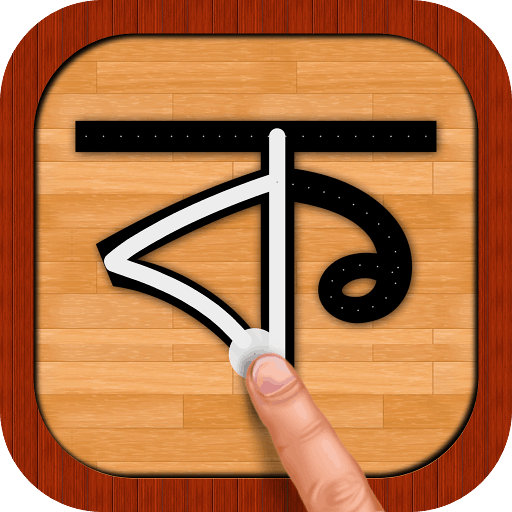
Kannada 101, Tamil 101, Telugu 101, Marathi 101, Bengali 101: these are just some of the apps from developer Uma Loganathan. You can also download Arabic 101, Vietnamese 101, and even English 101 and German 101. If you’re learning these languages, though, we’d take a look at Write Me instead. We feel that the Write Me app is generally a more well-designed option, especially since it also tests you on your ability to match the right character to an audio recording. However, the Write Me app barely has any Indian languages, and that’s where the 101 series shines. You’ll be able to trace the characters; switch between easy, normal, and freestyle modes; and receive a score out of 100. The stroke order and direction are clearly explained. Whenever you make a mistake, you receive instant feedback: the music stops and the “ink” stops flowing. This allows you to self-correct immediately, rather than practicing it wrong. The series has its flaws: like with most apps, you won’t learn how to join up characters. However, we think it’s a useful tool for beginners.
See our Super-Detailed 101 Script Writing App Review
PortalLearn

PortalLearn is an app that teaches 9 Indian languages and aims to help you learn these languages through interactive stories. The languages offered include Hindi, Bengali, Tamil, Telugu, Malayalam, Punjabi, Kannada, Marathi and Gujarati. With this app, you can dive into captivating narratives, learning vocabulary and grammar naturally through context. Through these interactive stories, you can grasp language concepts, making the learning process more enjoyable and effective. These interactive stories and lessons focus on helping you hone your listening, reading, and comprehension skills.
See our Super-Detailed PortalLearn Review
Simply Learn

In Simply Learn, by Simya Solutions, you can search for and review over 1000 phrases in over 30 categories. It takes the typical phrasebook app one step further by allowing you to add your favorite phrases to SRS flashcards. Given that its developers also developed Ling, an additional, more comprehensive resource that supports language learning, it seems that Simply Learn is a supplementary app for individuals who need to learn basic phrases for traveling abroad. The creators don’t seem to have intended for people to use this app to learn a language in its entirety, but rather to support them in memorizing basic phrases for travel.
See our Super-Detailed Simply Learn Review
Brainscape

Brainscape is a flashcard app that uses a Spaced Repetition System, also often referred to as ‘adaptive flashcards’, to help you memorize new vocabulary and facts. It has a team of scientists, engineers, and education experts working to optimize their program for effective learning. Brainscape is quite similar to Anki, but has a more modern and colourful interface. They also have Certified Classes, which are decks that seem to have been developed by experts in the chosen topic. The app adds what they call Intelligent Cumulative Exposure (ICE) to some of their Certified Classes; it seems to combine a Spaced Repetition System with gradually introducing new concepts, increasing the difficulty of the concepts, and providing context so you can build your own sentences.
See our Super-Detailed Brainscape Review
uTalk

Forvo’s mission is to improve spoken communication across cultures. Anyone can explore pronunciations of millions of words in over 390 languages with maps displaying where each speaker is from. The site also organizes popular categories and essential phrases for when you don’t have a specific word in mind. As a registered user, you can contribute to the site by pronouncing words or phrases in your native language or by requesting pronunciations in a specific language. You are also encouraged to vote on audio files in your native language to help others identify the best pronunciation. For those of you who enjoy using Anki, Forvo allows you to download mp3 files to use in your learning endeavours.
See our Super-Detailed uTalk Review
Forvo
Forvo’s mission is to improve spoken communication across cultures. Anyone can explore pronunciations of millions of words in over 390 languages with maps displaying where each speaker is from. The site also organizes popular categories and essential phrases for when you don’t have a specific word in mind. As a registered user, you can contribute to the site by pronouncing words or phrases in your native language or by requesting pronunciations in a specific language. You are also encouraged to vote on audio files in your native language to help others identify the best pronunciation. For those of you who enjoy using Anki, Forvo allows you to download mp3 files to use in your learning endeavours.
See our Super-Detailed Forvo Review
Quizlet

Quizlet is a flashcard-based learning system. Community-contributed flashcards are available for numerous languages. These vary in quality, but you can preview them to see how well they meet your needs. Each set of flashcards powers other activities: In Learn mode, you demonstrate your mastery of each word or phrase by using multiple choice to select the correct definition. There are also spelling and writing exercises. The spelling exercises can be frustrating, as they sometimes require the addition of alternate word endings that are not always pronounced by the speaker. A space-themed word game and a “Concentration”-style matching game inject some extra fun into your study time. Recent changes to Quizlet mean that you are now required to sign in to use the flashcard sets. As Quizlet is now promoting two premium plans — the modestly priced “Quizlet Plus” and the less-expensive “Quizlet Go” — you may encounter several promotions for these paid versions.
See our Super-Detailed Quizlet Review
Bluebird Languages

Bluebird Languages has several types of lessons you can choose from, including a daily lesson, core vocabulary, essential verbs, creating sentences, powerful phrases, and conversation. Each topic seems to have a beginner, intermediate, and advanced lesson, although it’s not clear how advanced “advanced” is. In each lesson, an English-speaking narrator will ask you to listen to and repeat translations of various phrases. The recordings in each language seem to use native speakers’ voices, which is quite the feat considering they have lessons in over 160 languages.
See our Super-Detailed Bluebird Languages Review
HelloTalk
HelloTalk is a mobile app for language learners interested in language exchange. It facilitates communication between native speakers and those learning their language with the use of built-in language tools. It also offers audio lessons in 10 languages as part of a separate subscription.
See our Super-Detailed HelloTalk Review
Tandem
Tandem is a popular language exchange app with over one million active users. It’s available for iOS and Android and aims to bring language learners from all over the world together. It’s largely centered around its chat capabilities and language tools that facilitate communication, but there is also a tutoring service offered in the app.
See our Super-Detailed Tandem Review
Speaky

Speaky is a social language-learning app for people interested in language exchange. It’s available for iOS, Android, and the web. Users can chat with other language learners, share photos, leave voice messages or even have voice calls. The basic features on Speaky are free to use, but access to more than five translations per day requires a subscription.
See our Super-Detailed Speaky Review
HiNative

HiNative is a Q&A app for language learners that want to have questions answered by native speakers. It’s available for iOS, Android and desktop, and it has over three million registered users. A free version is available that offers the basic features of the app.
See our Super-Detailed HiNative Review
50Languages

It is clear that 50Languages aims to make language learning accessible to anyone with an internet connection There is no signup required to use the site, so its resources are both free, and anonymous. You can find 100 free downloadable audio files of native speakers and ‘lessons’ in over 50 languages, in addition to vocabulary, alphabets, quizzes, and games. Unfortunately, none of these resources follow a cohesive learning path, nor does the platform help you memorize any of the information provided. 50Languages has a lot of information available, but it doesn’t seem like it can be used as a standalone language resource. Perhaps you can take phrases and vocabulary that interest you and compiled them into an Anki deck to help with retention.
See our Super-Detailed 50Languages Review
If you’re looking for more apps to support you as you learn Kannada, check out Kannada Alphabet (Aksharamale), SHABDKOSH Dictionary and Language Curry: Learn Language.
Kannada Courses
If you’re looking for structured in-depth learning, courses are a great way to build fluency step by step. Below are some Kannada language courses and classes to help guide your progress.
italki
italki is the most flexible and affordable place to find a tutor for the language you’re learning. They have a huge number of teachers offering classes to students of over 100 different languages. As a learner, you’ll be able to find a tutor that best fits your learning style, schedule, and personality. Teachers are able to set their own prices and make their own schedule.
See our Super-Detailed italki Review
Preply

Preply is an online educational platform that matches tutors with students. There are tutors on Preply offering instruction in a wide range of languages and other subjects. As a learner, you can find a tutor that works best for you by browsing their demo videos and filtering by price and rating. Each tutor’s teaching style is their own, but they all receive teacher trainings and resources to improve their style.
Exclusive 50% discount for ALR readers! Make sure to use our link to receive it.
See our Super-Detailed Preply Review
Hindustani Tongue

Hindustani Tongue is a language resource that aims to make learning accessible and enjoyable for you. It has comprehensive courses in multiple Indian languages, including Hindi, Punjabi, Bengali, Marathi, Gujarati, Tamil, Telugu, Kannada and English. Hindustani Tongue offers a comprehensive curriculum that covers all aspects of language learning, including grammar, vocabulary, pronunciation, and cultural context. The courses are carefully designed to cater to all levels. The lessons are offered in video format, either individually or as a group. Whether you’re a beginner or advanced learner, Hindustani Tongue ensures that you find the program that best suits your learning needs and goals. With their structured curriculum, you can track your progress and see tangible results as you advance.
See our Super-Detailed Hindustani Tongue Review
Kannada Kalike

Kannada Kalike, whose name means “learning Kannada”, will introduce you to the very basics of Kannada. It seems like a good choice for absolute beginners, although you’ll likely want to pair it with flash cards, further writing practice, and some additional word lists. The course starts with the alphabet before taking you through some of the language’s main grammatical features. It combines videos, text explanations, and a small amount of homework. Each lesson is clear and comprehensive, if a little dry. It also has a limited selection of additional video modules that will test your listening and introduce you to some extra vocabulary. The course seems to be well-designed and structured, and we feel that it would be a good starting place. However, you’ll quickly want more in-depth and detailed options in order to have natural conversations.
See our Super-Detailed Kannada Kalike Review
KannadaGottilla

Sign up to KannadaGottilla (whose name means “don’t know Kannada”) to enter into one of their WhatsApp courses and receive daily tuition from your “mentor.” There are separate groups for men and women, and also for beginners and intermediate-level students. For beginners, the course lasts for 30 days and you’ll learn basic words and phrases. You’ll also receive audio recordings and homework. And, of course, you’ll have the WhatsApp group in which to practice and ask questions. For intermediate students, the course is 45 days long. It focuses more on grammar, especially tenses. Everyone starts the course at the same time, and you should be able to join your course within 15 days of having signed up. Each group will contain 25–30 people, which means you benefit from joining a Kannada-learning community as well as the daily material and access to a mentor.
See our Super-Detailed KannadaGottilla Review
Learn Kannada (Bhasha.io)

This app sets out to provide an all-in-one Kannada-learning solution, from flash cards through to one-to-one classes. You can use Learn Kannada to access short, practical video classes. You’re then drilled on the material through spaced repetition, while gamification helps to keep you motivated. You can access a fair number of the classes for free. If you’re willing to pay, however, you then get access to the full set of video lessons as well as one-to-one classes with Kannada tutors. You’ll also get homework assignments. It seems like many students consider the classes to be the best part of the Learn Kannada app. However, our initial impression is that the free version of the app still offers plenty of value for beginner learners. Unfortunately, though, it’s not available in all regions.
See our Super-Detailed Learn Kannada (Bhasha.io) Review
Bhashafy Language Learning

Bhashafy Language Learning teaches Indian languages to beginners using immersive animations and illustrated stories to make your learning experience engaging and effective. The courses are available on Udemy and the languages offered include Hindi, Tamil, Telugu, with more to be added in the future. The courses have an immersive and interactive format with animated examples, vocabulary with images as well as high quality video and audio. Additionally, the courses incorporate the comprehensible input method of learning by using delightful stories and examples from Bollywood dialogues and songs after each lesson which utilize the concepts taught in an easy-to-follow manner.
See our Super-Detailed Bhashafy Language Learning Review
lexilogos

Although Lexilogos seems to have entirely neglected its aesthetics, it holds more than meets the eye. If you click on one of the 130+ languages listed at the bottom of the page, you will find a series of resources to support your studies. This is especially useful for less-studied languages, like Marathi, Basque, and Pashto. Although the lists don’t provide recommendations for applications, they do provide a list of dictionaries, keyboards, news sites, books, and research papers.
See our Super-Detailed lexilogos Review
Udemy
Udemy is a helpful resource for learning Kannada. Courses cover many topics and are available with a range of instructors. Each class has a money-back guarantee, but you also receive lifetime access to whichever courses you buy. The video format helps hone your listening and speaking skills, but many instructors offer written supplements, too.
Additional Resources for Learning Kannada
In addition to Kannada learning apps and courses, having several supplementary resources when learning the language is a smart choice. Textbooks or other forms of media that appeal to your interests could make learning Kannada much more enjoyable.
Kannada Textbooks
Using a textbook can add structure to your studies, especially if you haven’t signed up for a course or classes. Bear in mind that while textbooks can give you a good foundation in grammar and vocabulary, you might need to look elsewhere to practice listening. Plus, your spoken Kannada will definitely benefit from a language exchange.
grew out of the author’s experience of training volunteers in the American Peace Corps. It’s praised as one of the best resources available, especially for beginners, although some students find the structure frustrating.
by Ranga Rao is a hit-or-miss book. Generally, learners love the content but find the print slightly too small, especially when it’s explaining the script.
Whatever you do, don’t confuse Ranga Rao’s book with by Krishna Gopal Vikal. Its frequent errors and tiny print leave most learners frustrated.
If you’re just hoping to get by in Kannada, you might like Non Kannadiga To Naanu Kannadiga (assuming you can get your hands on a copy). It focuses on spoken Kannada, doesn’t use the Kannada script, and keeps grammar explanations to a bare minimum.
A few more options for learning Kannada include books that focus on everything from beginner basics to grammar and storytelling. Titles like Spoken Kannada for Absolute Beginners, Converstaional Kannada, 1000 Kannada Words & Sentences and Spoken Kannada Level 1 & Level 2 help you build vocabulary, phrases and practice spoken Kannada. For grammar and structure, Learn Kannada Through English and Modern Kannada Grammar both offer in-depth explanations. You’ll also find Kannada Short Stories for Beginners useful for reading practice.
And if you’re looking for reference books, the KANNADA-ENGLISH CONCISE DICTIONARY, Oxford English-Kannada Dictionary (Multilingual Edition), Oxford English-Kannada Dictionary and The Kannada Phrasebook and Dictionary are great tools to have on hand.

Kannada Fiction Books and Poetry
As a Classical Language of India, Kannada has a rich literary history that stretches from the ninth-century Kavirajamarga through to the modern day. But while there are numerous classic poems that are worth reading, you’ll probably find it easiest to begin with something more modern.
Beginner and lower-intermediate Kannada learners might prefer to read children’s short stories. Tulika Books also sells books for beginner readers.
Ready for something designed for adults? Masti Venkatesha Iyengar was a prolific short story writer and often referred to as “Kannada’s Treasure.” Alternatively, try K.P. Poornachandra Tejaswi, an award-winning poet, short story, and non-fiction writer.
If you can find Mohanaswamy by Vasudhendra in Kannada (or even in , Tamil, or Marathi), it’s worth the read. This poignant short story collection centers on the experiences of Mohanaswamy, a gay man who is blackmailed, struggles with online dating, and has to accept that his lover has decided to marry a woman.
by S.L. Bhyrappa explores witchcraft, religion, and local superstitions in Karnataka. If you like it, read and next.

YouTube Channels
If you don’t want to focus too much on one type of learning resource, YouTube can be a great addition to your study plan. For the very basics (like Kannada alphabets) Sugama Kannada and this playlist by Kannada TV are great places to start. Kannada TV also has playlists on learning Kannada through English and Hindi. Another channel to help you learn Kannada if you’re already familiar with Hindi is Dr. Deepa Gupta while Anish Tutorials has playlists on learning Kannada through Tamil as well as English.
Agurchand Babu Subramanian has a Learn Kannada playlist that gets more difficult as you progress. Learn Kannada Online has videos on spoken Kannada as well as vocabulary-based videos. Masala Chai Media has a playlist that teaches spoken Kannada and will help you pick up Kannada vocabulary.
If you’re looking for more video content, these YouTube channels offer valuable content.
Sandalwood Cinema: TV and Movies in Kannada
Turn your downtime into study time by watching Kannada-language TV shows and movies. Not only is it fun but you’ll find yourself picking up more colloquial phrases and getting used to a wider variety of accents. Plus, you’ll always have a good topic of conversation to fall back on.
Even if quiz shows aren’t your thing, it’s worth searching for episodes of Thatt Antha Heli on YouTube. This series tests participants on idioms, proverbs, riddles, synonyms, and more, making it ideal for language learners.
Ready to get lost in a movie? You’ve got plenty to choose from. Sandalwood, aka Kannada’s cinema industry, is thriving.
The dramatic comedy Thithi looks at how three generations of men respond to the death of the 101-year-old man who was their father, grandfather, or great-grandfather. It won awards and has been praised for its touching humanity as well as its satire.
Romantic comedy Kirik Party tells the story of a group of engineering students. Be warned: it was hit or miss with viewers.
Crime drama Ulidavaru Kandanthe weaves together the stories of five different characters. While it had a lukewarm reception with critics, it was a box-office hit and viewers had high praise for it.
In Chowka, five prisoners are jailed for crimes they didn’t commit. Viewers found it gripping, despite the three-hour running time.
When a middle-aged man with Alzheimer’s goes missing in Godhi Banna Sadharana Mykattu, his son sets out to find him. Add murder, land scams, and crooked cops to the mix, and this touching movie veers toward the dramatic.
The award-winning Dweepa explores the issue of forced displacement and why we remain attached to places and people. While one of the older movies on this list, it still feels relevant today.
For something a little more surreal, try Lucia, a crowdfunded movie that has been compared to Inception. It’s drawn glowing reviews from critics, but don’t feel bad if you struggle to follow the plot – it’s quite complex.
Watching Sandalwood shows on Netflix? Try using the Language Learning With Netflix plugin, which we think can help you understand the subtitles and revise new vocabulary.

News, Music, and Other Resources for Learning Kannada
While listening to music isn’t exactly studying, it further immerses you in Kannada, introduces you to extra vocabulary, and gets you thinking more in the language (especially if you like to sing along).
Make sure you find the music you like, rather than just adding songs to your playlists because they’re in Kannada. Try listening to multi-genre playlists like Spotify’s official ones: Latest Kannada and Kannada Indie. Alternatively, use that search bar – there are dozens, if not hundreds, to choose from.
Before you go using the new phrases with your friends, make sure you’ve looked them up in the dictionary and understand the context of them. Just because something’s said in a rap song doesn’t always make it suitable for everyday use. You might like the open-source Kannada-to-English dictionary Alar. Or, try English–Kannada.com.
These dictionaries will also come in handy for reading the news – something that won’t just get you practicing your reading but will also keep you up to date on what’s happening in Karnataka and the world. (Plus, how else will you understand all those Kannada-language memes on social media?)
Since every news site has its own editorial slant, not to mention more or less complex language, try a few out to find one you get on with. Here are a few options:

Even though you won’t find Kannada courses on Rosetta Stone and it’s absent from Duolingo, there’s a surprisingly large number of ways to study this beautiful language.
So, try out a Kannada course, book classes with a teacher, and start reading the imaginative novels of some of Karnataka’s greatest authors. It won’t be long until you’re speaking Kannada with confidence.
Challenges of Learning Kannada
While learning Kannada is immensely rewarding, it does come with its own set of challenges:
- Complex Grammar: Kannada grammar is rich and detailed, featuring various verb forms, cases, and honorifics that convey respect and social nuance.
- Pronunciation Nuances: Pronunciation involves several retroflex and aspirated sounds that might be new to English speakers.
- Script Mastery: Becoming comfortable with the Kannada script requires practice, but its logical structure offers a satisfying challenge.
The key is persistence and exposure—immersing yourself in conversations, literature, and media will help you overcome these hurdles over time.
Why Kannada Is Worth Learning
Kannada might appear intimidating at first, but it’s one of the most enriching linguistic challenges you can undertake. Its deep literary heritage, striking script, and friendly, expressive nature make it a treasure trove for anyone curious about history and culture. Imagine exploring the ancient ruins of Hampi, tasting the diverse flavors of Karnataka’s cuisine, and engaging with locals in their native tongue—the possibilities are endless.
For those who adore history as much as they adore food (as I do while roaming local markets in Neuchâtel, Sapporo, and Chiang Mai), learning Kannada offers a unique blend of past and present. It connects you with a culture that values art, tradition, and innovation all at once. Whether you’re a travel enthusiast, a literature lover, or simply someone who believes that every language is a new way to see the world, the Kannada language is a remarkable choice.
Related Posts
If you found this article useful, you might also like:
- How To Learn Tamil By Yourself – A Beginner’s Guide That Will Get You Started
- Learn Urdu Online – A Beginner’s Guide + Resources
- Learn Hindi Online – 16 Best and Worst Courses
- Learning Malayalam: A Complete Self-Study Guide
Frequently Asked Questions
How can I teach myself Kannada?
You can teach yourself Kannada by creating a structured learning plan using online courses, language apps, or a tutorto build a solid foundation in grammar, vocabulary, and pronunciation. Starting with a guided resource ensures you don’t miss essential concepts. Then, supplement your learning with extra activities like watching Kannada videos, using flashcards, or practicing with language exchange partners. A mix of structured study and immersive practice is the most effective way to teach yourself Kannada.
What is the best way to learn Kannada?
The best way to learn Kannada depends on your goals. For everyday conversation, working with a tutor or joining in-person classes, such as those offered at local temples, provides practical speaking experience. If you’re interested in reading literature or classical texts, choose a course that emphasizes Kannada grammar and script. Tailoring your learning approach to your specific purpose—whether spoken fluency or deep literary understanding—will help you progress more effectively.
What is the easiest way to learn Kannada?
The easiest way to learn Kannada is to choose tools that match your learning style and motivation. Visual learners benefit from apps or online courses, while auditory learners may prefer YouTube videos and native speaker audio. If you stay motivated by gamified learning, apps like Ling offer mini-rewards to keep you engaged. By tailoring your resources to how you learn best, Kannada becomes easier and more enjoyable to pick up.
How long does it take to learn Kannada?
For most English speakers, Learning Kannada to a basic proficiency level typically takes around 900 hours of dedicated study or class time, which equals about 2.5 years at one hour per day. However, if you immerse yourself by living in Karnataka or regularly interacting with native speakers, you can accelerate your progress significantly. Consistent practice, real-world exposure, and a focused study routine are key to learning Kannada faster.
Is there Duolingo Kannada?
No. As of now, Duolingo does not offer a Kannada course.